Digital Mindset And Student Resilience: A Post-Pandemic Study On Learning Motivation In Indonesian High Schools
DOI:
https://doi.org/10.51903/ak8gbz96Keywords:
Digital Mindset, Student Resilience, Learning Motivation, Digital Learning, Post-PandemicAbstract
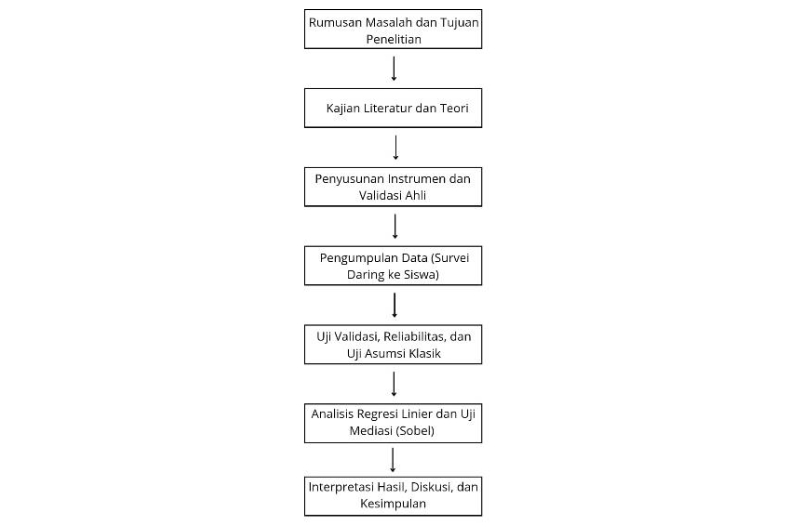
The COVID-19 pandemic has had a profound impact on the education system, forcing schools across Indonesia to rapidly transition to digital learning models. This abrupt shift demanded not only technical mastery of digital tools from students but also psychological readiness to adapt to a new, uncertain learning environment. These challenges raise a critical question: to what extent does students’ digital mindset influence their ability to maintain resilience and sustain learning motivation amidst the pressures and complexities of digital education? This study aims to examine the influence of digital mindset on the resilience and learning motivation of Indonesian secondary school students during the post-pandemic period. A quantitative approach was employed, using a cross-sectional survey design. Data were collected from 110 students through a validated online questionnaire based on a Likert scale, measuring levels of digital mindset, psychological resilience, and learning motivation. The data were analyzed using multiple linear regression to assess the relationships between variables. The results reveal that a digital mindset has a positive and significant effect on both student resilience (β = 0.421; p < 0.01) and learning motivation (β = 0.389; p < 0.01). These findings suggest that students with a higher digital mindset tend to be more adaptive in facing academic challenges and exhibit stronger motivation in digital learning contexts. This study underscores the importance of not only equipping students with digital infrastructure and skills but also fostering their mental capacity to endure and thrive amid ongoing educational transformation. Therefore, strengthening a digital mindset emerges as a key element in cultivating a generation of learners who are resilient, intrinsically motivated, and well-prepared to navigate the future landscape of education.
References
Aguaded, I., Vizcaíno-Verdú, A., García-Prieto, V., & de-Casas-Moreno, P. (2023). The Impact of Post-Pandemic Learning Loss on Education Development: A Systematic Review. In Review of Communication Research (Vol. 11, pp. 172–189). Review of Communication Research. https://doi.org/10.5680/RCR.V11.7
Alenezi, M., Wardat, S., & Akour, M. (2023). The Need of Integrating Digital Education in Higher Education: Challenges and Opportunities. Sustainability (Switzerland), 15(6). https://doi.org/10.3390/su15064782
Ang, W. H. D., Shorey, S., Lopez, V., Chew, H. S. J., & Lau, Y. (2022). Generation Z undergraduate students’ resilience during the COVID-19 pandemic: a qualitative study. Current Psychology, 41(11), 8132–8146. https://doi.org/10.1007/s12144-021-01830-4
Brauweiler, H., & Yerimpasheva, A. (2021). Moving to blended learning in the post-pandemic era. In: The impact of COVID-19 on accounting, business practice and education (1st ed.). Wroclaw University of Economics and Business. pp. 104–120. Wroclaw University of Economics and Business.
Chamberlin, K., Yasué, M., & Chiang, I. C. A. (2023). The impact of grades on student motivation. Active Learning in Higher Education, 24(2), 109–124. https://doi.org/10.1177/1469787418819728
Clary, G., Dick, G., Akbulut, A. Y., & Van Slyke, C. (2022). The After Times: College Students’ Desire to Continue with Distance Learning Post Pandemic. Communications of the Association for Information Systems, 50(1). https://doi.org/10.17705/1CAIS.05003
Cobo-Rendón, R., Bruna Jofre, C., Lobos, K., Cisternas San Martin, N., & Guzman, E. (2022). Return to University Classrooms With Blended Learning: A Possible Post-pandemic COVID-19 Scenario. Frontiers in Education, 7. https://doi.org/10.3389/feduc.2022.957175
Cook, J., Ecker, U. K. H., Trecek-King, M., Schade, G., Jeffers-Tracy, K., Fessmann, J., Kim, S. C., Kinkead, D., Orr, M., Vraga, E., Roberts, K., & Mcdowell, J. (2022). The Cranky Uncle game-Combining humor and gamification to build student resilience against climate misinformation. 29(4), 607–623. https://doi.org/10.1080/13504622.2022.2085671
Drach-Zahavy, A., Goldblatt, H., Admi, H., Blau, A., Ohana, I., & Itzhaki, M. (2022). A multi-level examination of nursing students’ resilience in the face of the COVID-19 outbreak: A cross-sectional design. Journal of Advanced Nursing, 78(1), 109–120. https://doi.org/10.1111/jan.14951
Hamadeh Kerbage, S., Garvey, L., Willetts, G., & Olasoji, M. (2021). Undergraduate nursing students’ resilience, challenges, and supports during corona virus pandemic. International Journal of Mental Health Nursing, 30(S1), 1407–1416. https://doi.org/10.1111/inm.12896
Hariri, H., Karwan, D. H., Haenilah, E. Y., Rini, R., & Suparman, U. (2020). Motivation and learning strategies: Student motivation affects student learning strategies. European Journal of Educational Research, 10(1), 39–49. https://doi.org/10.12973/EU-JER.10.1.39
Howard, J. L., Bureau, J., Guay, F., Chong, J. X. Y., & Ryan, R. M. (2021). Student Motivation and Associated Outcomes: A Meta-Analysis From Self-Determination Theory. Perspectives on Psychological Science, 16(6), 1300–1323. https://doi.org/10.1177/1745691620966789
Katyeudo, K. K., & de Souza, R. A. C. (2022). Digital Transformation towards Education 4.0. Informatics in Education, 21(2), 283–309. https://doi.org/10.15388/infedu.2022.13
Kobylаrеk, A. (2021). Post-pandemic challenges for learning communities. Journal of Education Culture and Society, 12(1), 5–11. https://doi.org/10.15503/jecs2021.1.5.11
Leitão, R., Maguire, M., Turner, S., & Guimarães, L. (2022). A systematic evaluation of game elements effects on students’ motivation. Education and Information Technologies, 27(1), 1081–1103. https://doi.org/10.1007/s10639-021-10651-8
Leonardi, P. M., & Neeley, T. (2022). The digital mindset: What it really takes to thrive in the age of data, algorithms, and AI. Harvard Business Review Press.
Mai, Y., Wu, Y. J., & Huang, Y. (2021). What Type of Social Support Is Important for Student Resilience During COVID-19? A Latent Profile Analysis. Frontiers in Psychology, 12. https://doi.org/10.3389/fpsyg.2021.646145
Marmolejo, F. J., & Groccia, J. E. (2022). Reimagining and redesigning teaching and learning in the post-pandemic world. New Directions for Teaching and Learning, 2022(169), 21–37. https://doi.org/10.1002/tl.20480
Nugroho, A. S., & Wibowo, M. C. (2024). Design and Implementation of Animated Stickers as an Educational Tool for Adolescent Drug Awareness Using the MDLC Method. International Journal of Graphic Design, 2(2), 179–206. https://doi.org/10.51903/ijgd.v2i2.2114
Pietsch, M., & Mah, D. K. (2025). Leading the AI transformation in schools: it starts with a digital mindset. Educational Technology Research and Development, 73(2), 1043–1069. https://doi.org/10.1007/s11423-024-10439-w
Puja Savira, Ulva Rahmi, & Rais Man Arif. (2023). Implementasi Media Game Edukasi Wordwall pada Mata Pelajaran Pendidikan Agama Islam Kelas IX di UPT SMP Negeri 13 Solok Selatan. Education : Jurnal Sosial Humaniora Dan Pendidikan, 4(1), 26–37. https://doi.org/10.51903/education.v4i1.450
Resti Kurnia Sari, Hidra Ariza, & Betti Sasmitta. (2023). Peran Guru Dalam Membentuk Karakter Siswa Melalui Pembelajaran PAI di SMP N 1 Tilatang Kamang. Education : Jurnal Sosial Humaniora Dan Pendidikan, 4(1), 12–25. https://doi.org/10.51903/education.v4i1.449
Salvetti, F., Galli, C., Bertagni, B., Gardner, R., & Minehart, R. (2022). A Digital Mindset for the Society 5.0: Experience an Online Escape Room. Lecture Notes in Networks and Systems, 349 LNNS, 290–303. https://doi.org/10.1007/978-3-030-90677-1_28
Sharma, A. (2021). Standard-Nutzungsbedingungen: Blended Mode of Learning is the Way Forward in the Post Pandemic Era ICT India Working Paper # 61. https://hdl.handle.net/10419/249850
Subiyantoro, S. (2024). Transformative online learning post-pandemic: challenges, opportunities, and future trends. Jurnal Pekommas, 9(1), 29–39. https://doi.org/10.56873/jpkm.v9i1.5233
Tahir, M., Tubaishat, A., Al-Obeidat, F., Shah, B., Halim, Z., & Waqas, M. (2022). A novel binary chaotic genetic algorithm for feature selection and its utility in affective computing and healthcare. Neural Computing and Applications, 34(14), 11453–11474. https://doi.org/10.1007/s00521-020-05347-y
Windy Rahmadani, Siska Prasinta Kesuma, & Opi Andriani. (2024). Peran Kepemimpinan Sekolah dalam Meningkatkan Hasil Belajar Anak Berkebutuhan Khusus di Sekolah Terintegritas. Education : Jurnal Sosial Humaniora Dan Pendidikan, 4(1), 118–127. https://doi.org/10.51903/education.v4i1.463
Downloads
Published
Issue
Section
License
Copyright (c) 2025 Devi Zakiyatus Solekhah, Faridatus Sakdiyah, Fera Silvia

This work is licensed under a Creative Commons Attribution-ShareAlike 4.0 International License.
All articles published in this journal are open access and licensed under the terms of the Creative Commons Attribution-ShareAlike 4.0 International License (CC BY-SA 4.0).
Under this license:
-
Authors retain copyright of their work.
-
Others are free to:
-
Share — copy and redistribute the material in any medium or format;
-
Adapt — remix, transform, and build upon the material for any purpose, even commercially;
-
-
As long as they:
-
Give appropriate credit to the original author(s) and the source;
-
Provide a link to the license;
-
Indicate if changes were made;
-
Distribute their contributions under the same license as the original.
-
This ensures that derivative works will also remain free and open under the same terms.