Pengembangan Media Diorama Siklus Air Untuk Pembelajaran IPA Kelas IV SD
DOI:
https://doi.org/10.51903/xavtsv95Keywords:
Learning Media , Water Cycle Diorama , Science Grade IV , ADDIE , R&DAbstract
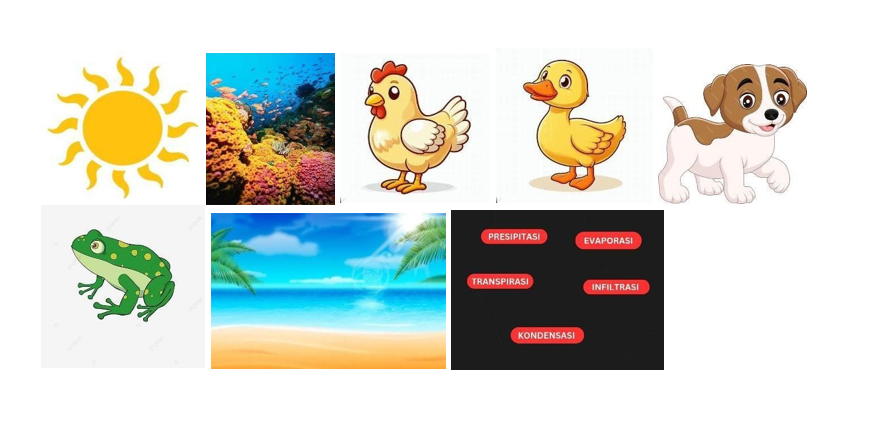
This research focuses on creating a water cycle diorama as an instructional medium for Natural Science education among fourth-grade students at SD Negeri 222 Palembang. The study employs a Research and Development (R&D) methodology following the ADDIE framework, which encompasses five sequential phases: Analysis, Design, Development, Implementation, and Evaluation. Following the development phase, the instructional medium underwent comprehensive validation by subject matter specialists and educational media experts to determine its suitability. Additionally, empirical trials involving educators and students were conducted to examine the medium's practicality and pedagogical effectiveness. Expert validation demonstrated exceptional validity, with subject matter specialists rating the medium at 86% and educational media experts providing an 87% validation score. Practicality assessment conducted by classroom practitioners yielded a 92% rating, confirming the medium's high usability in educational settings. Student trials were implemented through three progressive phases: individual assessment achieving 98% practicality, small group evaluation reaching 99%, and comprehensive field testing with 30 participants demonstrating 97% effectiveness. The findings indicate that the water cycle diorama serves as a highly suitable, practical, and pedagogically effective instructional tool for elementary science education at the fourth-grade level.
References
Achjar, K. A. H., Rusliyadi, M., Zaenurrosyid, A., Rumata, N. A., Nirwana, I., & Abadi, A. (2023). Metode penelitian kualitatif: Panduan praktis untuk analisis data kualitatif dan studi kasus. In PT. Sonpedia Publishing Indonesia.
Akbar. (2013). Instrumen Perangkat Pembelajaran. In Bandung: PT. Remaja Rosdakarya. Arsyad, A. (2006). Media Pembelajaran. In Jakarta: Raja Grafindo Persada.
Arsyad, A. (2011). Media Pembelajaran. In Jakarta: Rajawali Pers.
Atok, M. S., Romdanih, R., & Wulan, S. (2019). Upaya Meningkatkan Hasil Belajar IPS Materi Jual Beli menggunakan Model Contextual Teaching Learning. Prosiding Seminar Nasional Pendidikan STKIP KusumaNegara.
Daryanto. (2010). Media Pembelajaran. In Yogyakarta: Gava Media.
Firda Amalia, A., Aini, N., & Pradani, R. Y. (2022). Pengembangan Video Tutorial Pewarnaan Tekstur Bahan Sesuai Desain Di Smk Negeri 3 Malang. JVTE: Journal of Vocational and Technical Education, 04(2), 26–32.
Gusti Nyoman Pardomuan, S. P. M. P., & Yohanna Ristua, S. I. K. M. P. (2023). Buku Ajar Media Pembelajaran Tepat Guna (Issue October).
Hamalik. (2015). Kurikulum dan Pembelajaran. In Jakarta : Bumi Aksara.
Haryanti, S., Lastini, F., Susanto, A. H., Widyawati, Y., & Desstya, A. (2025). Diorama Sebagai Media Interaktif Dalam Pembelajaran Siklus Air Di Sekolah Dasar. Pendas : Jurnal Ilmiah Pendidikan Dasar, 10(01), 237–253.
Kiswandari. (2016). Pengembangan media pembelajaran diorama daur air pada mata pelajaran IPA kelas V SD negeri seyegan. Jurnal Pendidikan Guru Sekolah Dasar, 970–975.
Kustandi, C., & Sutjipto, B. (2016). Media Pembelajaran: Manual dan Digital. In Depok: Rajawali Pers.
OECD. (2013). PISA 2012 Results in Focus: What 15-Year-Olds Know and What They Can Do with What They Know. Paris: OECD Publishing
Pentianasari, S., & Firmannandya, A. (2022). Penggunaan Media Pembelajaran Diorama Untuk Meningkatkan Hasil Belajar IPA Siswa Kelas V-F Di SDN Tanah Kelikedinding V Surabaya. Jurnal Pendidikan, 1(1), 534–551.
Putri, O. A. (2022). Jurnal Pendidikan dan Konseling. Jurnal Pendidikan Dan Konseling, 4(20), 1349–1358.
Rodriguez, M. A., & Martinez, L. C. (2024). Physical models in elementary science education: A systematic review of learning outcomes and cognitive retention. International Journal of Elementary Education, 45(3), 287–305.
Sapriati, A. (2014). Pemanfaatan Media Pembelajaran dalam Proses Belajar Mengajar. In Jakarta: Direktorat Jenderal Pendidikan Tinggi.
Sudjana, N., & Rivai, A. (2011). Media Pengajaran. In Bandung: Sinar Baru Algensindo.
Susanti, J., Fatmawati, R. A., & Listiarini, Y. (2024). Pengembangan Media Diorama Siklus Air Pada Pembelajaran Ipas Kelas V Sdn 15 Sungai Raya. Jurnal Inovasi Pendidikan, 2(4), 228–239.
Trianto. (2010). Model Pembelajaran Terpadu. In Jakarta: PT. Bumi Aksara.
Zhang, H., Chen, W., Liu, S., & Wang, Y. (2023). Three-dimensional visual aids in science education: Impact on conceptual understanding and student engagement. Journal of Science Education and Technology, 32(4), 512–528
Downloads
Published
Issue
Section
License
Copyright (c) 2025 Education : Jurnal Sosial Humaniora dan Pendidikan

This work is licensed under a Creative Commons Attribution-ShareAlike 4.0 International License.
All articles published in this journal are open access and licensed under the terms of the Creative Commons Attribution-ShareAlike 4.0 International License (CC BY-SA 4.0).
Under this license:
-
Authors retain copyright of their work.
-
Others are free to:
-
Share — copy and redistribute the material in any medium or format;
-
Adapt — remix, transform, and build upon the material for any purpose, even commercially;
-
-
As long as they:
-
Give appropriate credit to the original author(s) and the source;
-
Provide a link to the license;
-
Indicate if changes were made;
-
Distribute their contributions under the same license as the original.
-
This ensures that derivative works will also remain free and open under the same terms.